Shade
How to find your TFIT foundation shade
What C, N and W mean, how depth is numbered, and how to land on one of 30 shades.
Concealer
Three pans, one compact, and a cream that has to be warmed before it works. Once you know which pan goes where, it takes a minute.

The TFIT 3 Color Concealer Palette is a round compact with three cream concealers in it. Each pan holds 5 g, so the whole compact carries 15 g. On our Korean site the same product goes by the name Cover Up Pro Concealer.
One shade of concealer matches one part of a face. Skin under the eye is often darker than the cheek, and the sides of the nose are often redder. Three pans let you match each spot, or mix two of them on the back of your hand until the color sits right.
We rate the cover as full and the finish as natural, with up to 12 hours of wear. The cream resists sweat and humidity.
This is a spot concealer. It goes where foundation left something showing, not over the whole face.

Buyers have rated the palette 2,937 times, and the average stands at 4.2 out of 5. Most of the praise is for cover on dark circles. Most of the complaints are about a dry feel, and the fix for that lies in how you prepare the cream.
Each palette is built for a range of skin tones, and each pan has a name and a job on the label. Find the palette made for your skin first.
| Palette | Made for | Pan 1 | Pan 2 | Pan 3 |
|---|---|---|---|---|
| 01 Neutral | Most light to medium skin tones | Light Beige: highlight, blemishes | Natural Beige: wide-area cover | Dark Beige: contour |
| 02 Warm | Warm medium skin | Natural Beige: wide-area cover | Deep Beige: contour | Peach Beige: dark circles |
| 03 Cool | Cool light to medium skin | Ivory Beige: highlight, blemishes | Natural Beige: wide-area cover | Pink Beige: dark circles |
| 04 Dark | Tan skin | Yellow Beige: dark circles | Brown Beige: wide-area cover | Tan Beige: contour |
| 00 Light | Bright ivory skin | Fair Beige: highlight | Cream Beige: dark blemishes | Linen Beige: wide-area cover |
| 05 Deep | Deep skin | Camel Brown: highlight, blemishes | Ginger Brown: wide-area cover | Burnt Brown: contour |
| B01 Corrector | Color correcting on any skin tone | Clear White: highlight, tone-up | Salmon Pink: dark circles | Milky Purple: yellowness, dullness |
Six palettes are skin tones, numbered from light to deep. B01 Corrector is different: it holds no skin tone at all. Its pans change the color of what sits under your concealer.
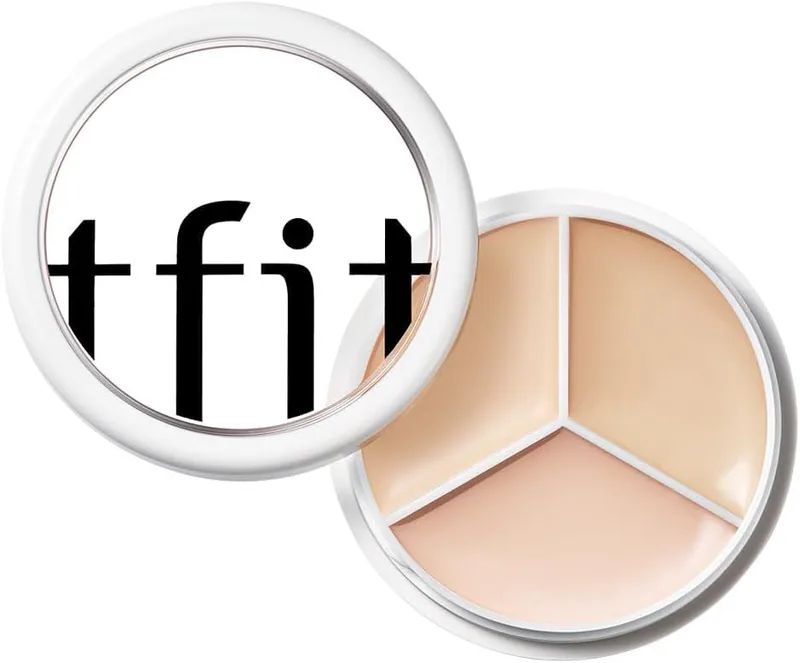
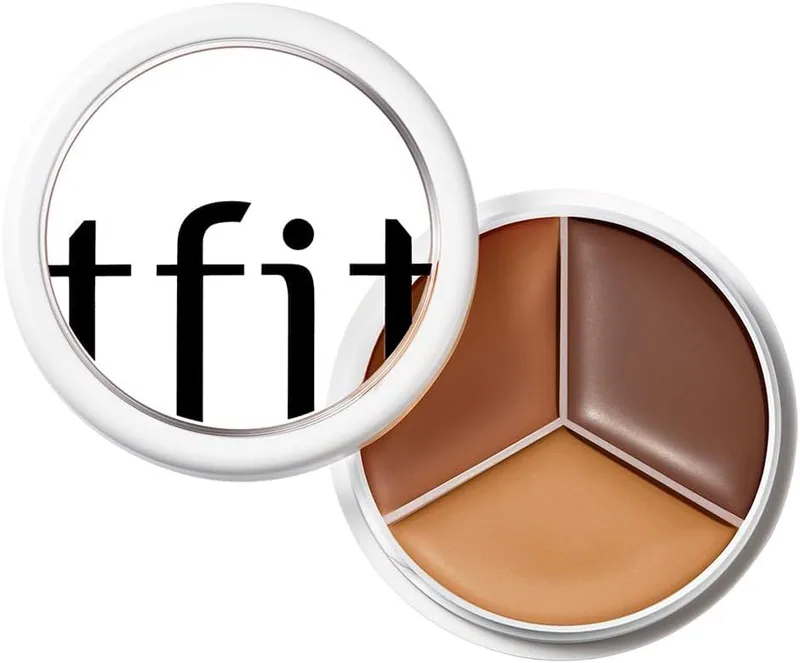
Not every palette has every kind of pan. 00 Light has no contour shade, because all three of its pans sit close to fair skin. 02 Warm has no highlight pan.
If one job matters most to you, sort the palettes by that job.
| Job | Pans the label gives it to | Palettes |
|---|---|---|
| Dark circles | Peach Beige (02), Pink Beige (03), Yellow Beige (04), Salmon Pink (B01) | 4 of 7 |
| Highlight | Light Beige (01), Ivory Beige (03), Fair Beige (00), Camel Brown (05), Clear White (B01) | 5 of 7 |
| Blemishes | Light Beige (01), Ivory Beige (03), Cream Beige (00), Camel Brown (05) | 4 of 7 |
| Wide-area cover | Natural Beige (01), Natural Beige (02), Natural Beige (03), Brown Beige (04), Linen Beige (00), Ginger Brown (05) | 6 of 7 |
| Contour | Dark Beige (01), Deep Beige (02), Tan Beige (04), Burnt Brown (05) | 4 of 7 |
| Yellowness, dullness | Milky Purple (B01) | 1 of 7 |
Start with depth. Fair skin goes to 00 Light.
Light to medium skin goes to 01 Neutral, 02 Warm or 03 Cool. Tan skin goes to 04 Dark and deep skin to 05 Deep.
Then undertone, which only splits the middle of the range. 03 Cool carries a pink pan and 02 Warm a peach one, so the name of each palette is the undertone it was mixed for. 01 Neutral sits between them.
If you do not know your undertone yet, our note on finding a foundation shade shows how to read it, and the shade finder lays every code out by depth.
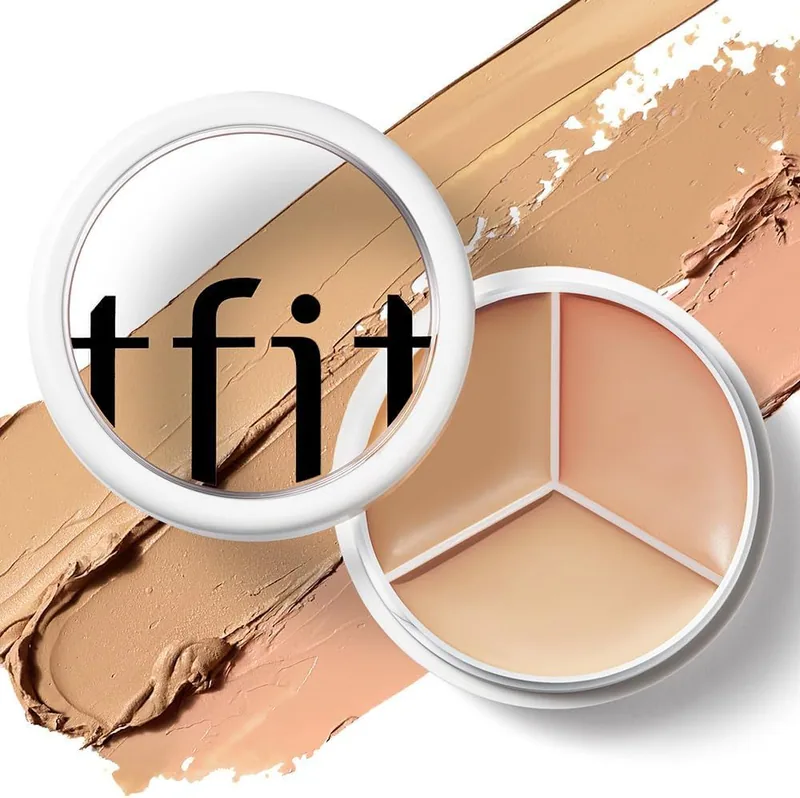
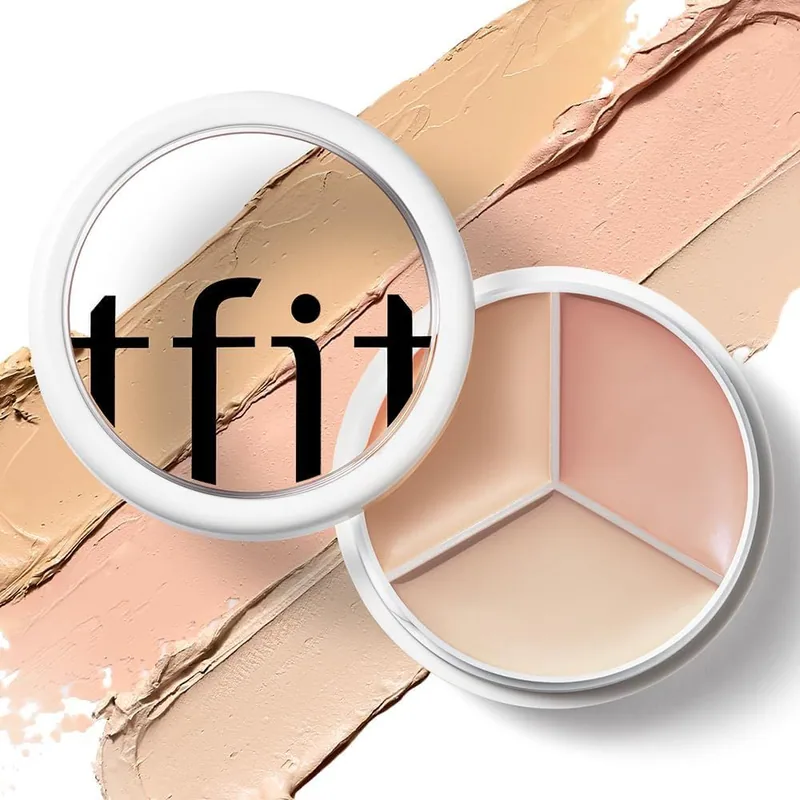
01 Neutral is the safe first pick for light to medium skin. Its label reads "most light to medium skin tones", and it is the one palette in that range with a highlight pan, a base pan and a contour pan together.
A palette will not rescue a guess that is two steps off. Mixing moves a color a little lighter or a little deeper. It cannot turn 05 Deep into a match for fair skin.
Rub one pan of the 3 Color Concealer Palette with a clean fingertip for a few seconds, until the surface turns soft and slick. The cream is firm when it is cold, and 1 pass of a warm finger loosens it.
Moisturize first if your skin is dry, and give the moisturizer a minute to sink in.
Rub a pan with a fingertip until the cream softens.
Pick up less than you think you need. A thin film on the fingertip is enough for one under-eye.
Pat it on the spot that needs cover, alone or mixed with the pan beside it.
Press the edges out with a sponge or a clean finger.
Add a second thin layer only where the spot still shows.
Buyers who skip the first step say so. The cream has little slip of its own, and on dry skin it can grab and look heavy.
Coverage is good but I have dry skin. Sometimes finishing look could be cakey if it’s not moisturized enough
Dermatologists at the AAD say that creams and ointments add more moisture to skin than lotions do. On a dry day, a cream moisturizer under the eye is the better partner.
It feels slightly thick but on the skin it melts in well.
The directions name two tools: a fingertip to soften and place the cream, and a sponge or a clean finger to press the edges out. A finger gives the most cover, because its warmth keeps the cream soft while you work. A damp sponge thins the layer and suits the wide-area pan.
A small flat brush helps with one job, a single blemish. Load the brush from a pan you have already softened, not from a cold one. Set the color down without dragging it.
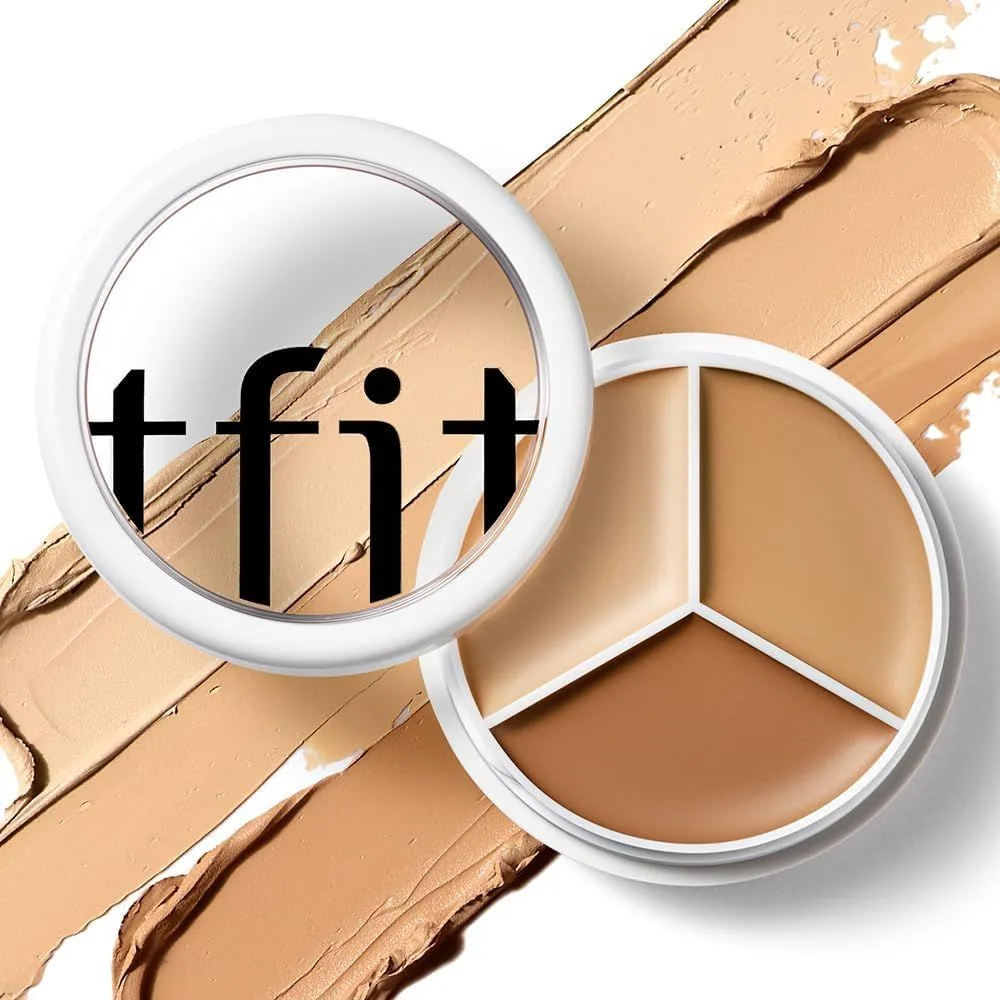
Use the peach, pink or salmon pan of the 3 Color Concealer Palette: Peach Beige in 02 Warm, Pink Beige in 03 Cool, Yellow Beige in 04 Dark and Salmon Pink in B01 Corrector. These 4 pans are the ones the label assigns to dark circles.
The logic is a makeup convention, not science. Dark circles often read blue or gray. A warm peach or pink laid over them makes that cast harder to see, where a plain beige over the same spot can turn ashy.
| Palette | Dark-circle pan | Skin-tone pan to tap over it |
|---|---|---|
| 02 Warm | Peach Beige | Natural Beige |
| 03 Cool | Pink Beige | Natural Beige |
| 04 Dark | Yellow Beige | Brown Beige |
| B01 Corrector | Salmon Pink | A pan from your skin-tone palette, since B01 Corrector holds none |
Pat the tinted pan on the darkest part only. That is usually the inner corner and the hollow under it.
Then tap a skin-tone pan over the top and out toward the cheek. One buyer with the 03 Cool palette describes the same two steps.
I put the pink beige (the salmon/pink color) on the dark circles, then the ivory beige (the lightest shade) precisely cover the dark tear trough shadows.
01 Neutral, 00 Light and 05 Deep carry no tinted pan. With those, mix the lightest pan into the wide-area pan for the under-eye, or put the salmon pan of B01 Corrector underneath.
Keep the layer thin. Skin under the eye moves all day, and a thick layer of any cream will show it.
Redness around the nose and on the cheeks is a job for the wide-area pan, the one closest to your own skin tone. Soften it, pat it on, and press the edges out until no line shows.
If the red still comes through, a green corrector underneath is the usual answer. Ours is a liquid: Idol Cover in B30 Green.
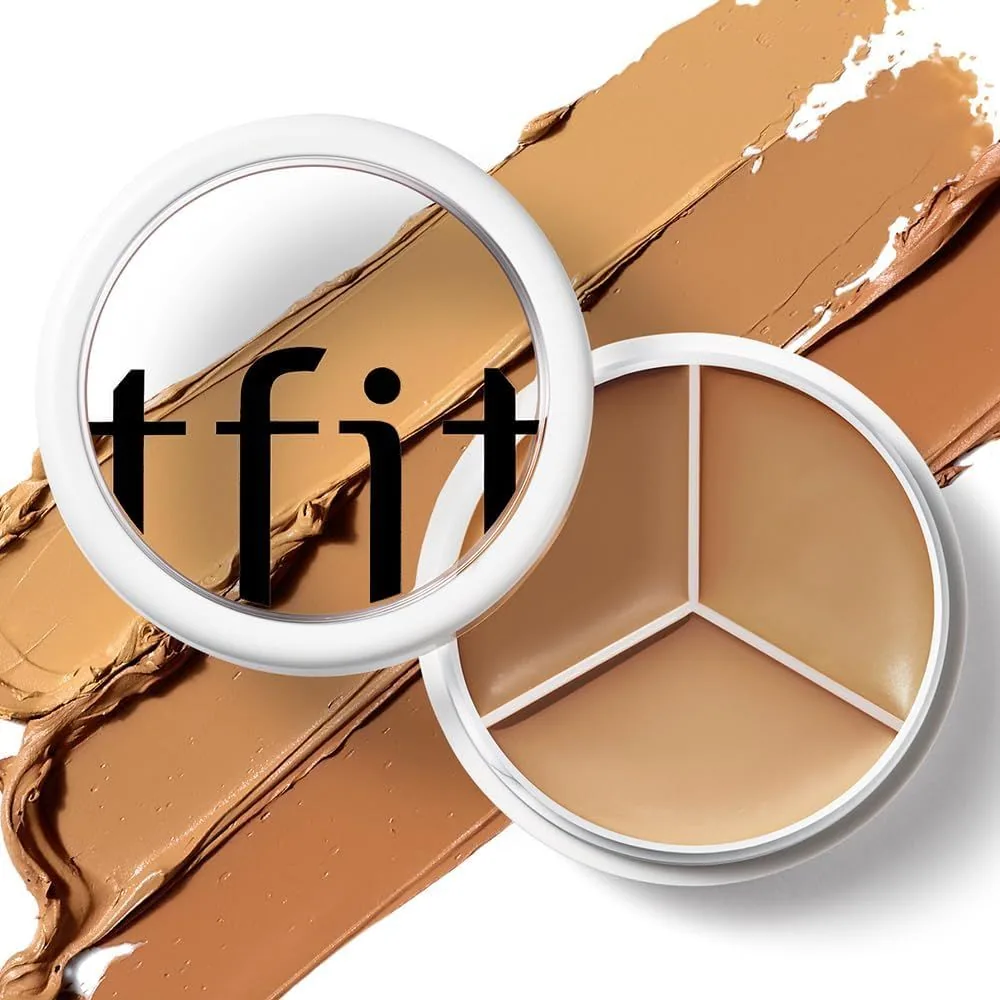
Take the pan the label gives to blemishes and check it against the skin around the spot. It should match that skin, not sit lighter than it. Set a dot on the spot with a small brush or the tip of a finger, then tap only the edge of the dot so the center stays covered.
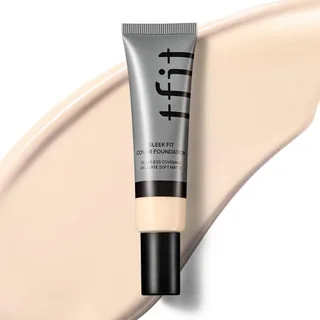
For an uneven patch on the cheek or forehead, use the wide-area pan with a damp sponge, in thin layers. If the patch covers most of your face, a full-cover foundation such as Sleek Fit Cover Foundation does that job with less work.
The palette will not cover a severe birthmark or a large pigmented area. One buyer found the cover good, but short of the description.
It is good but not great coverage as described.
The label names the contour pans: Dark Beige in 01 Neutral, Deep Beige in 02 Warm, Tan Beige in 04 Dark and Burnt Brown in 05 Deep. Draw a short line under the cheekbone, along the jaw or down the sides of the nose. Then blend it upward with a sponge.
A cream contour is easier to add than to take away. If the line looks like a stripe, tap the wide-area pan over its edge.
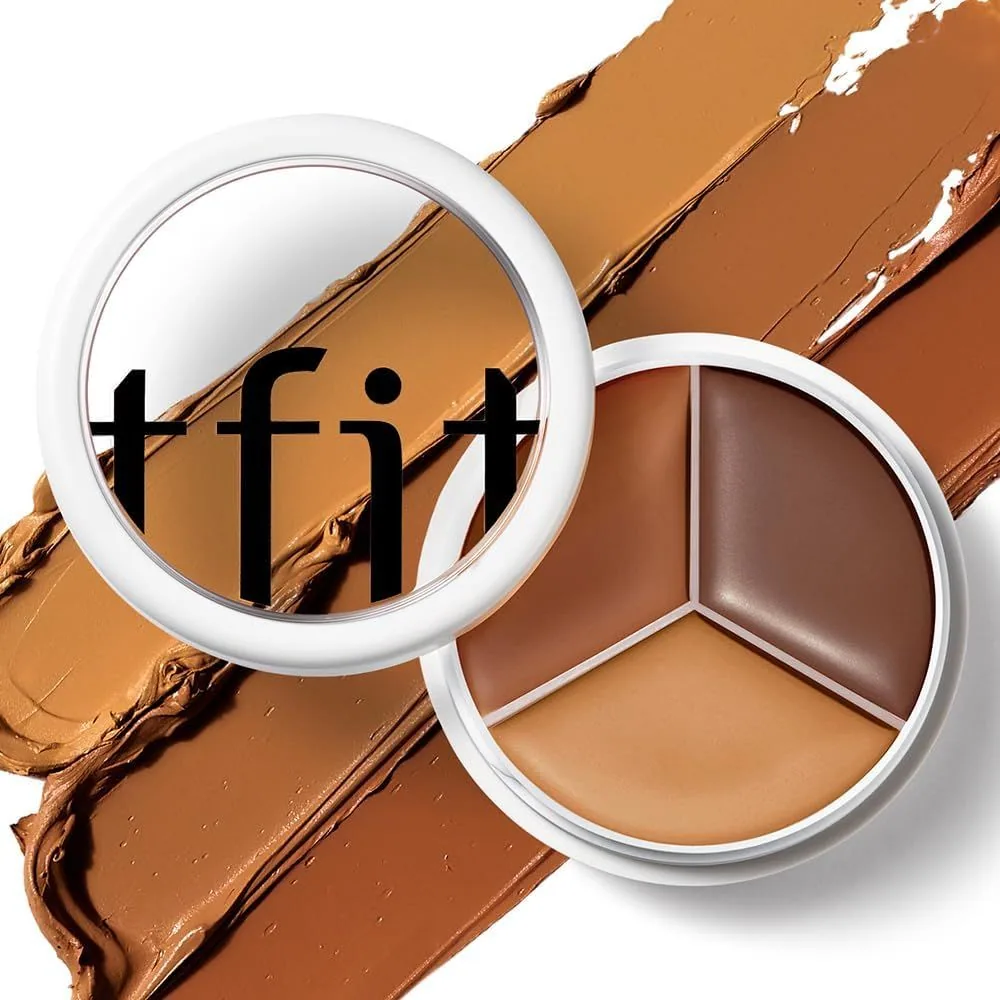
Highlight pans are the lightest in each palette. Tap a little on the bridge of the nose, the top of the cheekbone and the center of the forehead. The finish is natural, so the lift comes from the lighter color, not from shine.
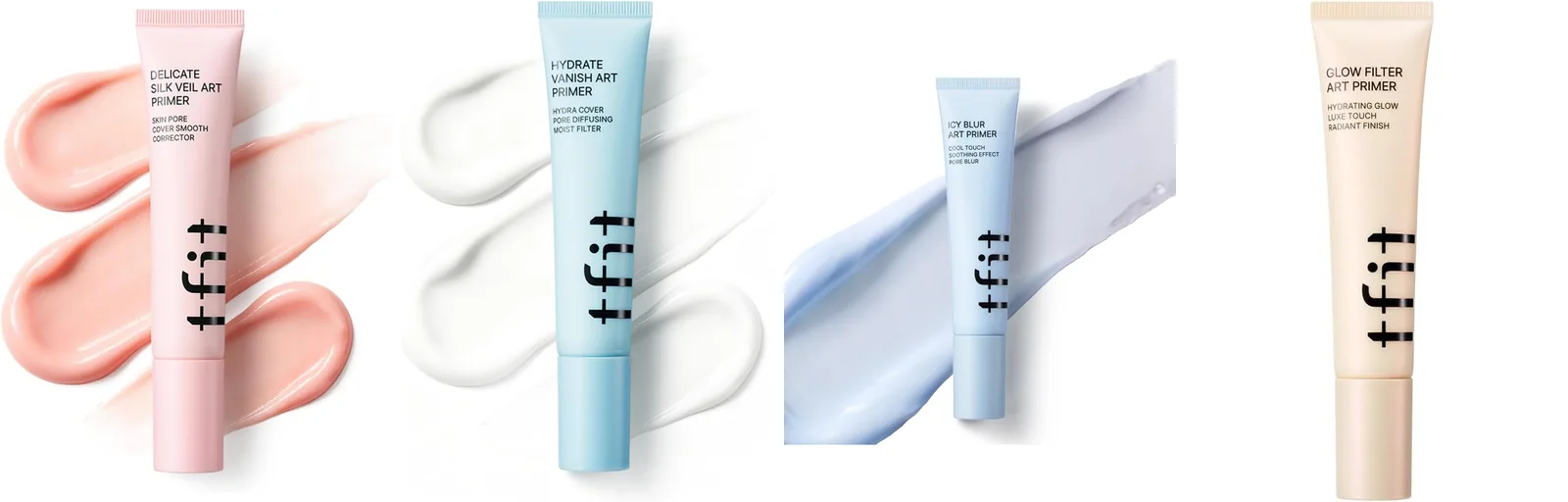
If you want glow, the palette will not give it. A glow primer such as Glow Filter under foundation does that.
Only if a color still shows through your concealer. The B01 Corrector palette holds 3 pans that are not skin tones (Clear White, Salmon Pink and Milky Purple), and each goes under a skin-tone pan or mixes into one.
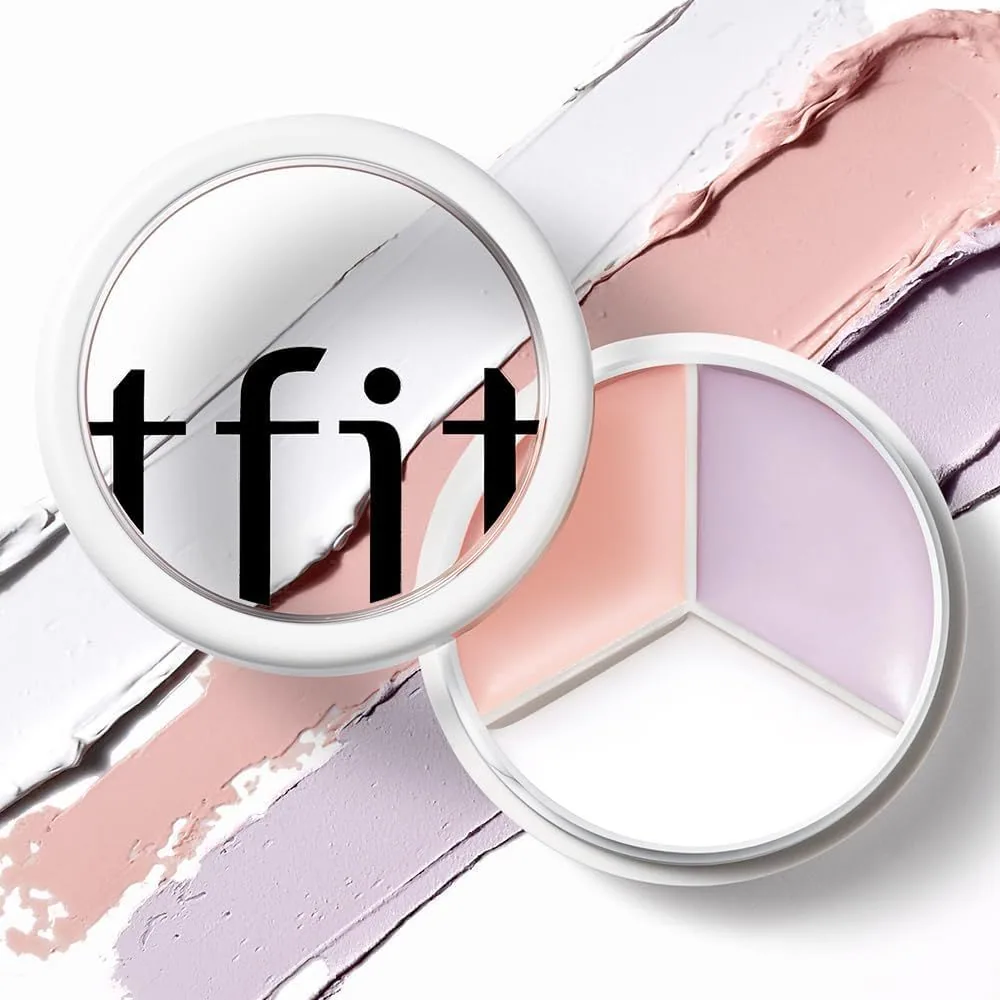
Color correcting follows a simple convention from makeup practice: lay the opposite color over the one you want to quiet. Salmon goes over blue-gray circles, purple over a yellow or dull cast, green over red.
None of this is science, and none of it changes the skin. It changes what the eye reads through the next layer.
| Color | Product | Form | What it is for |
|---|---|---|---|
| Clear White | 3 Color Concealer Palette, B01 | Cream pan | Highlight, tone-up |
| Salmon Pink | 3 Color Concealer Palette, B01 | Cream pan | Dark circles |
| Milky Purple | 3 Color Concealer Palette, B01 | Cream pan | Yellowness, dullness |
| Coral | Idol Cover Concealer, B20 | Liquid with a tip | Bluish under-eye circles |
| Green | Idol Cover Concealer, B30 | Liquid with a tip | Redness |
| Green | Translucent Set Finishing Powder, 03 | Loose powder | Tones down redness |
| Lavender | Translucent Set Finishing Powder, 04 | Loose powder | Brightens yellowness |
| Baby Pink | Translucent Set Finishing Powder, 05 | Loose powder | Adds a lively pink |
Clear White is the odd one out. It is a highlight on fair skin and a mixer on any skin: a touch of it makes a skin-tone pan one step lighter.
B01 on its own will not look like skin. Worn alone, salmon reads pink and purple reads purple. Always finish with a skin-tone pan or with foundation.
Skin-tone pans go on after foundation. Foundation evens most of the face, and then you can see what is left to cover. You use less concealer this way.
Correctors are the exception. Salmon, purple and green go on before foundation, in a thin layer, so the foundation hides their color. The full order, from primer to powder, is in our base routine.
Your foundation decides how much work the palette has to do. Over Radiance Fit Serum Foundation, with its medium cover and dewy finish, expect to use it on under-eyes, redness and spots. Over Sleek Fit, with full cover, you may need it only under the eyes and for contour.
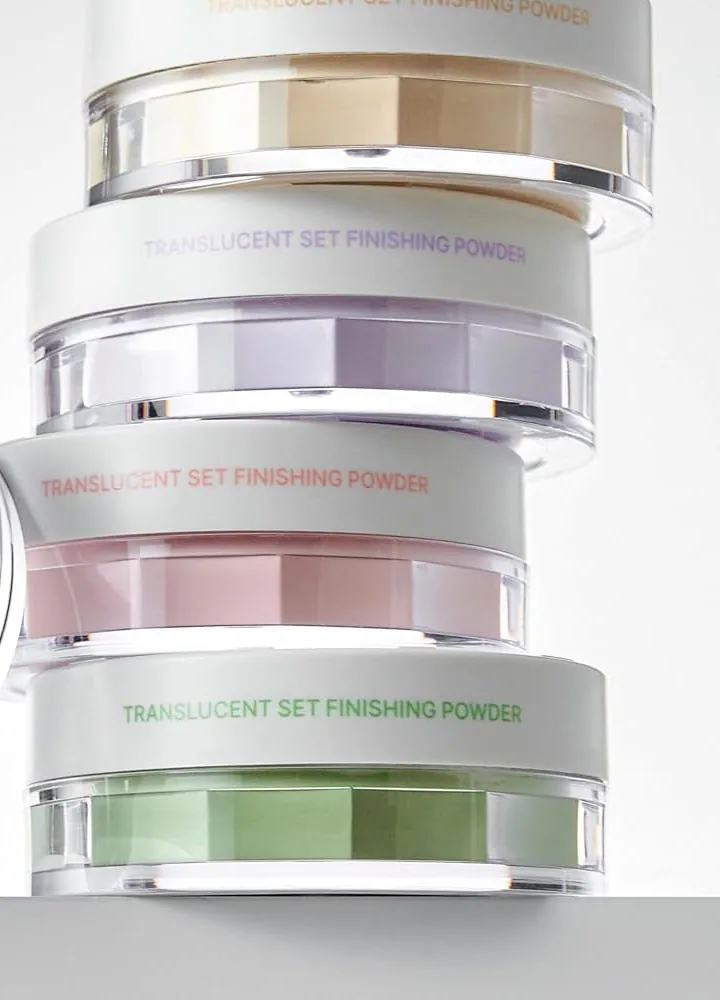
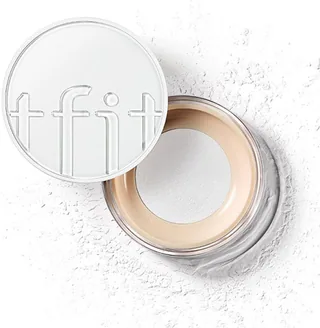
Cream stays movable until you set it. Press a little Translucent Set Finishing Powder over the concealed spots with its built-in puff, starting under the eyes. Tap, do not sweep, or the puff drags the cream with it.
01 White is the translucent shade and works over any palette. The beige shades add a little color, so pick the one nearest your foundation depth.
The powder is matte and it contains fragrance. On dry under-eyes use the smallest amount, or leave that area unpowdered.
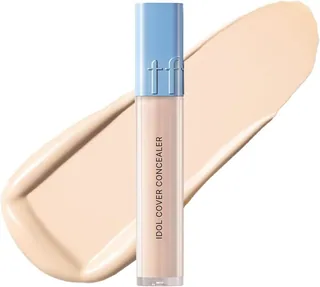
Take Idol Cover Concealer when you want 1 shade and no mixing. It is a liquid in a 6.5 g tube with a built-in tip.
The point of the tip dots a small spot. The flat side sweeps a wider area such as the under-eye.

| 3 Color Concealer Palette | Idol Cover Concealer | |
|---|---|---|
| Form | Cream in a three-pan compact | Liquid in a tube with a built-in tip |
| Net weight | 15 g, three 5 g pans | 6.5 g |
| Coverage | Full | Full |
| Finish | Natural | Natural |
| Resistance | Sweat and humidity resistant | Waterproof and sweat-proof |
| Wear time | Up to 12 hours | No wear time in hours is named |
| Made for | Dark circles, redness, blemishes, dull areas, contour and highlight | Under-eyes, redness, spots and dull areas |
| Choices | 7 palettes of three pans | 11 single shades |
| Price from | $15.99 | $15.90 |
| Price per gram, at the lowest price | $1.07 | $2.45 |
The liquid needs no warming, so it is quicker on a cold morning and kinder to a rushed one. The palette gives you three colors, plus contour and highlight, in one compact.
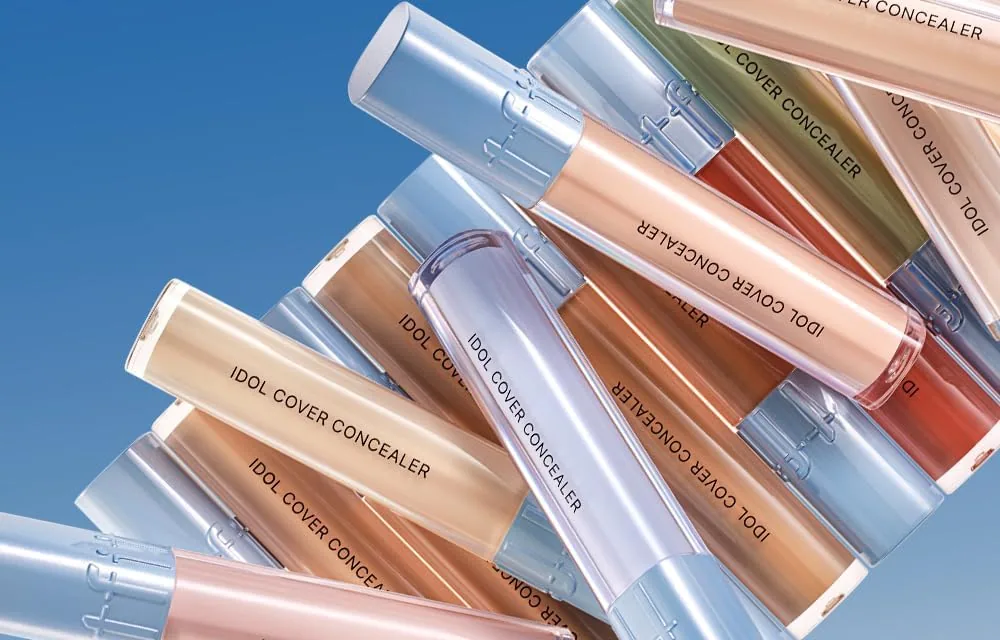
Idol Cover shares its shade codes with our two foundations. If you wear N03 Ginger in either foundation, N03 Ginger in the concealer sits at the same depth and undertone. With the palettes you match by eye.
| Shade | Undertone | Depth group | Same code in the foundations |
|---|---|---|---|
| C01 Porcelain | Cool | Light | Yes, in both foundations |
| W01 Vanilla | Warm | Light | Yes, in both foundations |
| N1.5 Suede | Neutral | Light | Yes, in both foundations |
| W02 Almond Butter | Warm | Medium | Yes, in both foundations |
| W2.5 Honey | Warm | Medium | Yes, in both foundations |
| N03 Ginger | Neutral | Medium | Yes, in both foundations |
| W03 Healthy | Warm | Medium | Yes, in both foundations |
| W04 Buff | Warm | Medium | Yes, in both foundations |
| N05 Toffee | Neutral | Medium | Yes, in both foundations |
| B20 Coral | Corrector | Corrector | No, it is not a skin tone |
| B30 Green | Corrector | Corrector | No, it is not a skin tone |
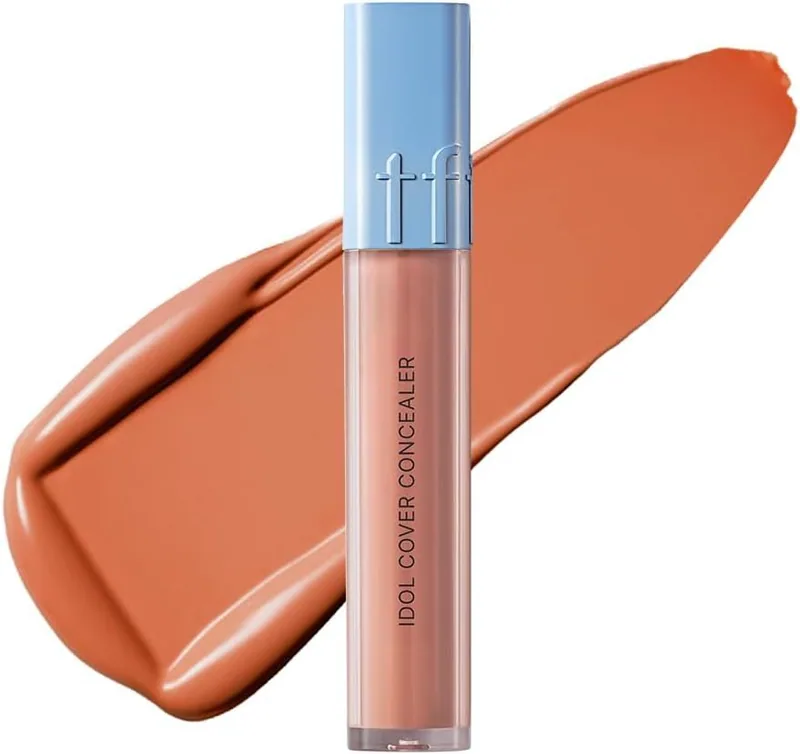
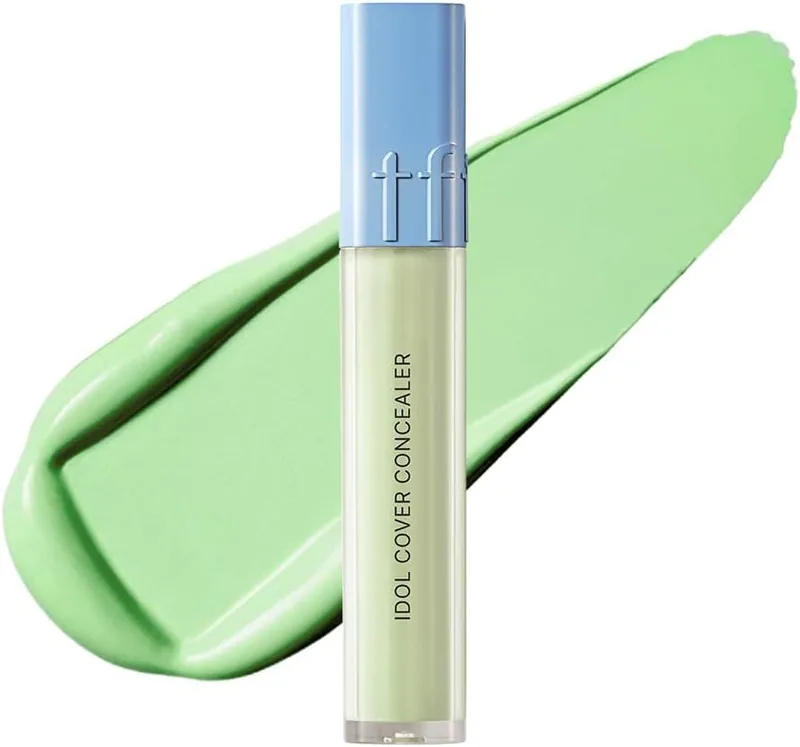
B20 Coral does the job of the salmon pan in liquid form. B30 Green is the one corrector the palettes do not have. The tube holds 6.5 g: enough for spots and under-eyes, not for a full face.
Most trouble with the palette comes from one habit: treating a firm cream like a liquid.
If your skin reacts easily, test the cream on a small area before it goes near your eyes. Dermatologists at the AAD describe how to run that test at home.
Apply the product to a test spot twice daily for seven to 10 days. Choose a quarter-sized spot on your skin where the product won’t be rubbed or washed away, such as the underside of your arm or the bend of your elbow.
No reaction after those days means you can use the palette on your face. If one does appear, the advice is short.
If you develop a skin reaction, gently wash the product off as soon as possible, and don’t use it again.
Makeup covers. It does not change the skin under it.
The palette carries no SPF, so sunscreen goes on earlier in your routine. If a spot is sore, broken or changing, leave it bare and ask a dermatologist about it.
Wash your hands before you touch the 3 Color Concealer Palette, close the lid after every use, and keep the compact out of direct sunlight. All 3 pans are open to your fingertip, so clean hands matter more here than with a tube.
Dipping fingers into a product adds microorganisms, such as bacteria and fungi (mold and yeast), which need to be controlled, for example, by preservatives.
The FDA also advises keeping containers and applicators clean, and not sharing makeup. Wash the sponge or brush you blend with, and wipe the rim of the compact when cream collects there. If you use the palette on someone else, lift the cream out with a clean cotton swab, not a finger.
Temperature changes and exposure to sunlight and air can cause changes in color and texture and may cause the products to smell.
The label on the compact says the same in fewer words: close the lid fully after use, and store it away from direct sunlight. The FDA notes that products can dry out, harden and crack.
Don't store cosmetics at temperatures above 85 degrees F.
So not a car in summer and not a sunny windowsill. A drawer or a makeup bag at room temperature is right. If the cream changes color, smell or texture, replace it.
Both concealers sit together in our concealers, and everything they go over or under is in the full range. Orders are placed with our retail partner.
This guide is about makeup, not skin treatment. If a product stings or leaves a rash, stop using it, and ask a dermatologist about a skin condition.
Sources read for this guide
Shade
What C, N and W mean, how depth is numbered, and how to land on one of 30 shades.
Routine
Five steps in order, with the one choice to make at each.